The other day, my daughter came home with an interesting observation from school.
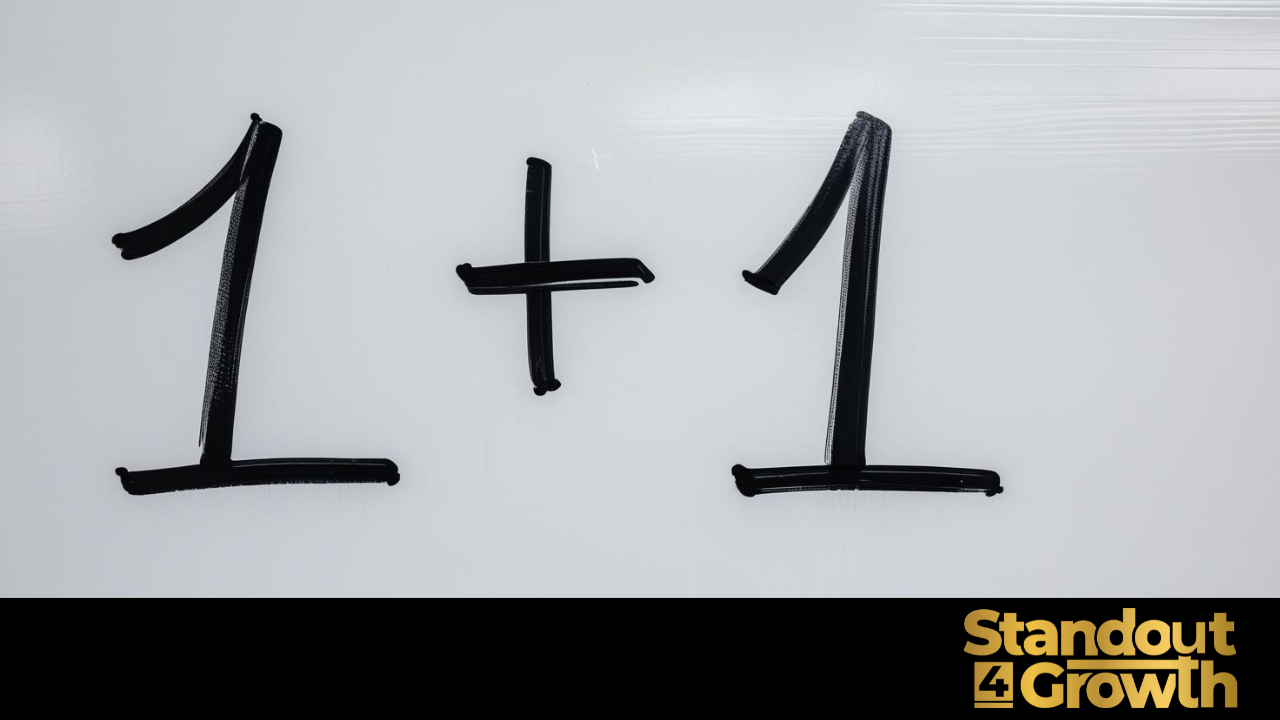
“Teachers teach us 1 + 1 in class, give us 5 × 5 for homework, then test us with 1,000 × 1,000 in exams.”
Her question: Why doesn’t what we’re taught in class match what we’re expected to do in exams?
I found myself thinking about how often the same thing happens in life, particularly in our professional careers.
We begin by learning the basics. How to present ourselves, communicate, build relationships and do our jobs well. That’s our 1 + 1.
As our careers progress, the expectations increase. We have to navigate difficult workplace relationships, manage competing priorities, establish credibility and make decisions that affect other people. That’s the 5 × 5.
Then comes life’s unexpected twists and turns. A job loss, a career transition, a reputational challenge or an opportunity that requires us to demonstrate capabilities we haven’t had to explain before.
Suddenly, we’re dealing with 1,000 × 1,000.
And sometimes, we discover that the things we assumed would be enough to carry us through our careers need a little more work.
We tend to focus on our professional reputation when we need something, perhaps a promotion, a new role or greater visibility. Yet the foundation of that reputation is built through the everyday decisions, relationships and contributions we make long before those defining moments arrive.
The small things we do consistently have a way of becoming important when we least expect them to.
That’s why I believe developing good personal branding habits is part of preparing ourselves for whatever our professional journeys bring.
Know Your 1+1: Build Your Personal Brand on Clear Values
Before you can build a strong personal brand, you need to understand what it stands for.
This sounds obvious, but I’ve found that many professionals spend more time thinking about how they want to be perceived than examining what they genuinely value.
We think about the job titles we want, the positions we aspire to and the professional image we would like to project.
Those ambitions are important, but they need a foundation.
What principles guide your decisions? What do you want colleagues and clients to experience when they work with you? Which strengths do you consistently bring to different situations?
These are the basics of personal branding.
Think about the professionals you’ve come to trust over the years. Chances are, that trust didn’t develop because of an impressive LinkedIn headline or a well-written professional biography.
It probably grew through repeated experiences. Perhaps they consistently delivered on their commitments. Maybe they were honest when things went wrong, treated others with respect or demonstrated sound judgement in difficult situations.
Over time, those behaviours became part of their reputation and that’s something worth remembering.
Your personal brand is shaped as much by what people experience of you as by what you say about yourself.
If you want to be recognised as a dependable leader, dependability has to show up in your decisions.
If you want to be known for integrity, that value needs to remain visible even when doing the right thing is inconvenient.
The same applies to collaboration, curiosity, resourcefulness and whatever other qualities you want your professional reputation to reflect.
You don’t need to have every aspect of your career figured out to begin, but you do need to understand the values and capabilities that form your foundation.
Your small habit: Take a few minutes to identify three qualities you want people to associate with you professionally. Then ask yourself whether your everyday behaviour gives them enough reason to make those associations.
That’s your 1 + 1.
Get the fundamentals right, because the more complicated questions are coming.
Practise Your 5×5: Build Professional Credibility Through Small Habits
As we grow in our careers, the expectations placed on us change.
We move from learning how to do a job to taking responsibility for outcomes, developing others, influencing decisions and navigating situations that don’t always have straightforward answers.
The basics are important but we have to learn how to apply them in more demanding circumstances.
This is where consistency becomes important.
I sometimes think we underestimate how much of our professional reputation is built through ordinary moments.
The way you respond to a difficult email. How you handle a disagreement in a meeting. Whether you follow through on a commitment. How you treat colleagues when you’re under pressure.
None of these may seem significant at the time, but people notice patterns.
Someone who consistently brings thoughtful solutions to discussions may gradually become known as a reliable problem-solver.
A manager who takes time to develop their team may build a reputation for growing talent.
A professional who shares useful knowledge and willingly collaborates with others may become someone colleagues naturally seek out.
These reputations are rarely built through a single dramatic achievement.
They develop through repeated experiences.
The same principle applies to professional visibility.
You don’t have to publish content every day or attend every networking event to strengthen your personal brand.
In fact, trying to do too much can become counterproductive.
I’ve explored this in The Exhausted Expert: Why Doing It All Is Killing Your Personal Brand, where we examine why building a stronger reputation sometimes requires becoming more selective about where we invest our time.
Consistency should serve a purpose.
If you want to become known for your expertise, perhaps you could begin contributing thoughtful observations to relevant professional discussions.
If you’re preparing for a leadership role, you might become more deliberate about seeking opportunities that demonstrate strategic thinking.
If you’re considering a career transition, you could begin documenting achievements and developing relationships beyond your current organisation.
These actions may appear small, but they create opportunities for others to understand the value you bring.
Your small habit: Choose one meaningful action you can practise consistently.
It could be documenting an achievement at the end of each week, contributing to an industry conversation, keeping in touch with a professional contact or developing a skill connected to your future ambitions.
You don’t need to do everything every day.
What matters is developing habits that support the reputation you want to build and that you can realistically maintain alongside your responsibilities.
Just as the 5 × 5 questions help a student apply the basics in more demanding situations, these professional habits help us practise the values and capabilities we will eventually need when the stakes are higher.
Prepare for the 1,000×1,000: Protect Your Professional Reputation
And then life gives you a question you weren’t expecting.
Perhaps your organisation announces a restructuring, and the position you’ve held for years is suddenly uncertain.
Maybe an opportunity emerges in a completely different industry, and you’re asked to explain why your experience is relevant.
You could find yourself dealing with a workplace conflict, a difficult business decision or a reputational challenge that tests your professional relationships.
These are the 1,000 × 1,000 moments.
They rarely arrive when we’re perfectly prepared, and they, in most cases will expose gaps we’ve overlooked while focusing on the demands of our everyday work.
Consider a senior professional who unexpectedly loses their job after many years with the same organisation.
If they’ve maintained meaningful professional relationships, kept track of their achievements, continued developing their expertise and built a reputation beyond their immediate workplace, they have something to draw upon as they consider their next move.
That doesn’t make job loss any easier, nor does it guarantee another opportunity, but it means they are not starting the process of explaining their professional value from scratch.
They have people who know their work, evidence of their contribution and a clearer understanding of the capabilities they can offer another organisation.
The same principle applies when a reputational challenge arises.
The relationships you’ve nurtured, the consistency of your conduct and the credibility you’ve earned over time can influence how others interpret a difficult situation.
Of course, even professionals with strong reputations can face unfair treatment, misunderstandings or circumstances beyond their control.
A personal brand is not insurance against life’s difficulties, but it can provide a more established foundation from which to respond.
This is one reason I believe we should be intentional about our professional reputations long before we need them to help us navigate a difficult transition.
If you’ve spent years building expertise but never made that expertise understandable beyond your immediate colleagues, a sudden career change can become especially challenging.
If your professional relationships exist entirely within one organisation, you may discover how limited your network has become only when you need to explore opportunities elsewhere.
And if you’ve never taken time to reflect on your achievements, you may struggle to explain the value of your experience when someone asks.
Your small habit: Periodically ask yourself whether your professional reputation reflects the career you want to build, and not the job you’re currently today.
Are you maintaining relevant relationships? Can you explain your contribution clearly? Have you continued developing your capabilities?
You may not know what your next major career test will look like, but you can strengthen the foundations you’ll rely upon when it arrives.
Learn from Every Career Test: Reflect, Adapt and Grow
There’s another thing I find interesting about my daughter’s observation.
When students encounter a difficult question in an exam, the experience often reveals something about what they understand and what they still need to learn.
Sometimes they discover that they know more than they thought.
Other times, they realise that memorising a method is different from knowing how to apply it.
Professional life is much the same.
We learn through experience, and some of our most valuable lessons emerge from situations we would never have chosen for ourselves.
A project that didn’t deliver the expected results may teach us more about stakeholder engagement than several successful assignments.
A difficult conversation might expose a weakness in how we communicate.
An unsuccessful job application may reveal that our experience is stronger than our ability to articulate it.
These experiences are definately uncomfortable but they are the opportunities we need to examine how we’re growing and whether our professional reputation is keeping pace.
I don’t believe personal branding should be about maintaining the same identity throughout your career.
Our interests change. Our capabilities develop. We take on different responsibilities and sometimes discover strengths we didn’t know we had.
The professional you were ten years ago may be very different from the professional you’re becoming today.
That evolution is natural.
The important thing is being willing to recognise it and, where necessary, adjust how you communicate your value.
I’ve explored this further in The Fluidity of Life: Is a Changing Personal Brand Good?.
Make Reflection a Professional Habit
One practice I would encourage everyone to take up is taking time to reflect on your experiences rather than rushing from one assignment to the next.
After a significant project, professional milestone or difficult situation, ask yourself:
– What did this experience teach me about my strengths?
– What would I approach differently next time?
– Which capabilities did I develop or demonstrate?
– Has this experience changed what I want to be known for?
You don’t need to turn every experience into a public lesson or LinkedIn post. Some reflections are simply for your own growth. Others may eventually help you mentor someone, make a career decision or contribute a more informed perspective to a professional conversation.
Your small habit: At the end of each month, identify one lesson that has changed how you approach your work.
Write it down.
Over time, those reflections can help you recognise patterns in your development and make more deliberate choices about your professional future.
What’s Your 1+1 Today?
My daughter’s question reminded me of something we sometimes forget as our careers become more demanding.
We don’t prepare for life’s biggest professional tests only when they arrive.
We prepare through the relationships we build, the choices we make, the capabilities we develop and the reputation we earn along the way.
None of these actions may seem particularly significant on an ordinary day, but over time, they become part of the professional foundation we rely on when circumstances change.
And when the 1,000 × 1,000 questions arrive, we’ll be drawing upon much more than what we learned at the beginning of our careers.
We’ll be drawing upon everything we’ve practised, experienced and learned along the way.
So, what’s your 1+1 today?
What small action could you take to strengthen the reputation you’re building?
The next big test may not announce itself in advance, but the small things you do today can help you prepare for it.